
Dealer Product Line Planning: A Model-Based Guide for Powersports Buyers
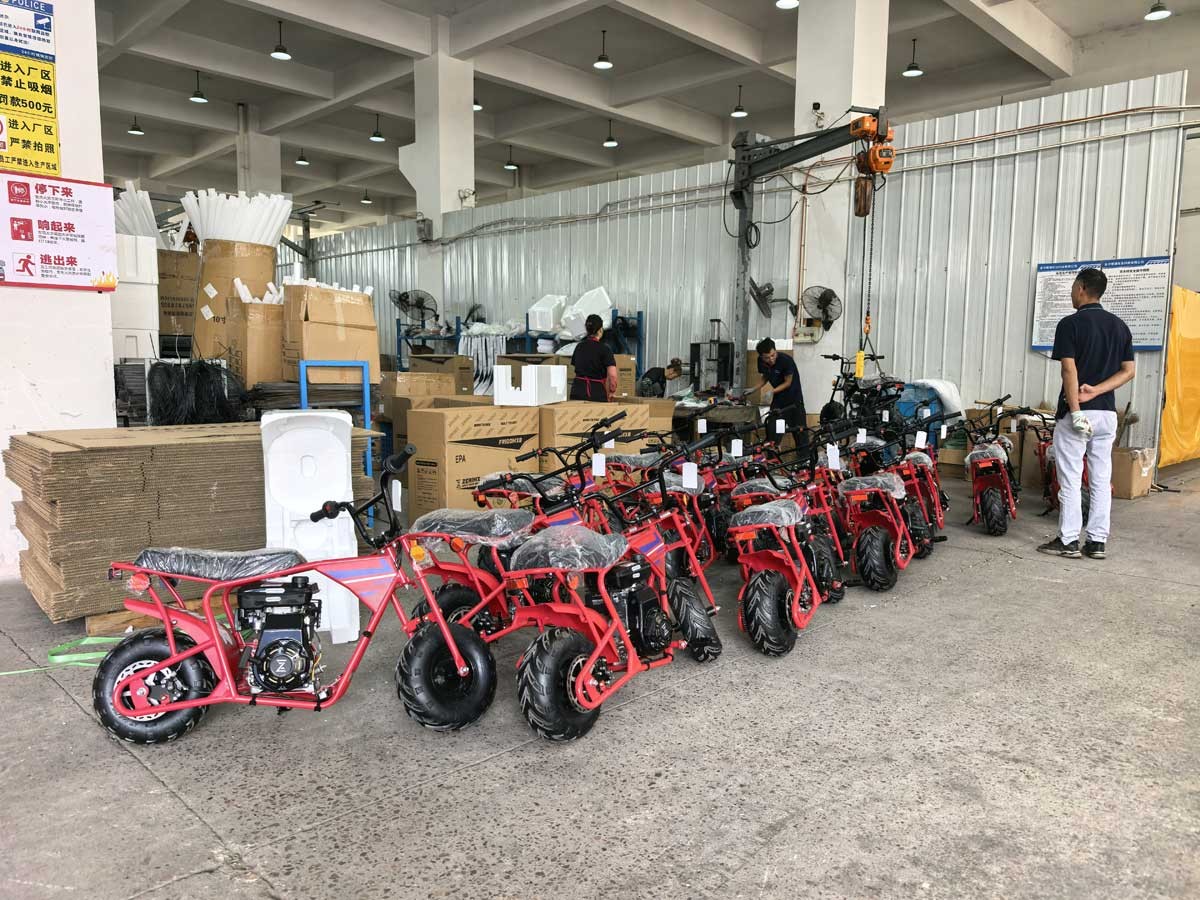
Dealers do not need the largest possible catalog. They need a product line that is easy to explain, matched to local demand and supported by model-level documents. For EverJoy Moto's current program, Go Kart is the core category, supported by ATV, Mini Bike and Electric Dirt Bike products.
This guide gives distributors, importers and dealers a repeatable way to choose models, validate commercial assumptions and build a 90-day launch plan. Prices, margins, inventory turns, certifications and performance claims must be confirmed for the exact SKU and destination market before publication or ordering.
Request a Dealer Lineup Review | View Products
Executive answer
Start with a Go Kart comparison set, then add one or two complementary categories only when the customer journey and service capacity justify them. Use the four Go Kart models as the primary discussion:
- Gasoline Go Kart:
FR200GK-6,FR100GK - Electric Go Kart:
FR60DGK-6,FR20DGK
Use FR125ATV-SP and FR60DATV-UT for ATV use cases, FR100XMB and FR025DMB for Mini Bike comparisons, and FR08DEB for the Electric Dirt Bike position. The final assortment should be based on local demand, route/use case, rider fit, documents, landed cost and after-sales capability.
1. Build the line around customer jobs
| Customer job | First product conversation | Evidence to confirm |
|---|---|---|
| Family recreation or outdoor entertainment | Go Kart: FR100GK or FR20DGK | Seats, dimensions, speed, rider limits, safety equipment and operating area |
| Rental or entertainment fleet | Go Kart: FR200GK-6 or FR60DGK-6 | Duty-cycle test, maintenance plan, spare parts, controls, charger/fuel process and fleet warranty |
| Single-rider property or farm inspection | ATV: FR125ATV-SP or FR60DATV-UT | Load limit, route, tires, clearance, accessories, energy support and local rules |
| Entry Mini Bike program | FR100XMB or FR025DMB | Seat height, rider fit, speed, battery/fuel system, supervision and safety documents |
| Electric off-road product line | FR08DEB | Voltage, capacity, chemistry, BMS, charger, range test, transport and safety documents |
This table is a sales-screening framework, not a suitability guarantee. A model should only be promoted for a use case supported by its current technical sheet and manual.
2. Go Kart is the core product category
Go Kart should receive the first content, sample and sales resources because it gives a dealer both fuel and electric product conversations and can serve retail, family recreation and fleet inquiries. The four-model structure is useful for comparison, but it does not prove that any model is suitable for racing, commercial rental or public-road use.
Go Kart model roles
| Model | Power position | Recommended buyer conversation | Must confirm before claim |
|---|---|---|---|
FR100GK | Gasoline entry comparison | Family recreation, first purchase and introductory retail | Engine, seats, dimensions, speed, rider/load limits, safety equipment |
FR20DGK | Electric entry comparison | Family recreation and small electric fleet evaluation | Battery, charger, runtime test, charging process, seats and controls |
FR200GK-6 | Gasoline higher-output comparison | Performance-oriented retail or fleet tier | Engine output, speed, frame, braking, duty-cycle and maintenance evidence |
FR60DGK-6 | Electric higher-output comparison | Premium electric fleet or performance comparison | Battery, charger, range test, thermal controls, duty-cycle and service package |
Go Kart content priorities
- Family and dealer lineup page: explain the gasoline/electric and entry/higher-output choices without unsupported age claims.
- Rental fleet procurement page: focus on duty cycle, inspection, parts, charging/fueling and operator procedures.
- Gasoline vs electric comparison: compare verified data only; do not assume lower operating cost or longer life.
- Container and service guide: publish loading, packaging, spare-parts and pre-shipment checklists after logistics data is confirmed.
3. Complementary products and cross-selling
Complementary products should solve a related customer need, not simply increase the SKU count.
| Category | Current model(s) | Cross-sell logic | Required evidence |
|---|---|---|---|
| ATV | FR125ATV-SP, FR60DATV-UT | Move from recreation or property-access inquiry to a single-rider ATV solution | Power, seat height, clearance, tires, load and exact documents |
| Gasoline Mini Bike | FR100XMB | Entry powersports and compact recreation | Rider-fit dimensions, speed, engine, controls and safety guidance |
| Electric Mini Bike | FR025DMB | Electric entry comparison and charging-led sales conversation | Battery, charger, BMS, runtime test and replacement plan |
| Electric Dirt Bike | FR08DEB | Electric off-road upgrade or separate category | Battery pack, motor, range test, load, charger and transport evidence |
Do not publish an age ladder, “safe for” label or upgrade promise until the exact rider-fit and destination-market documents are available.
4. Product-line selection scorecard
Use a weighted scorecard before placing a first order. Suggested weights can be changed by the dealer; the important point is to record the evidence and the owner of each assumption.
| Criterion | Suggested weight | What to record |
|---|---|---|
| Local customer demand | 20% | Search demand, competitor assortment, dealer enquiries and seasonality |
| Model evidence | 20% | Current specification sheet, manual, photos and change-control status |
| Compliance and transport | 15% | Destination requirements, certificates, labels, battery shipping documents |
| Landed economics | 15% | Quoted unit price, freight, duty, handling, warranty reserve and local selling price |
| Service readiness | 15% | Parts list, repair information, training, warranty workflow and response owner |
| Inventory risk | 10% | MOQ, lead time, floor space, reorder trigger and aged-stock plan |
| Brand and content fit | 5% | Product images, differentiators, comparison content and dealer assets |
The scorecard is a planning tool, not a guarantee of margin or sell-through. Replace every estimate with a dated source or supplier quotation.
5. Commercial assumptions to validate
Do not publish a fixed MSRP, gross margin, annual turnover or fleet volume as an industry fact without a source and market scope. Validate the following for each model:
- Ex-factory price, freight, duty, broker and destination handling;
- Local competitor price and actual channel discount;
- MOQ, mixed-container rules, sample cost and lead time;
- Warranty reserve, parts cost, technician time and return process;
- Financing, insurance, accessories and seasonal demand;
- Retail, rental or commercial-use restrictions in the target jurisdiction.
For internal planning, calculate:
Landed cost = unit price + freight + duty + brokerage + handling + compliance/document cost
Gross margin % = (net selling price - landed cost - variable selling cost) / net selling price
These formulas should use the dealer's actual quotation and local costs rather than a generic benchmark.
6. Content and merchandising plan
Priority 1: Go Kart core
Publish the Go Kart lineup page, four model cards, gasoline-versus-electric comparison, rental fleet checklist and a sample-order CTA. Use the exact product photos and ALT text for FR100GK, FR20DGK, FR200GK-6 and FR60DGK-6.
Priority 2: B2B purchase decisions
Create pages for trial orders, private label, multi-category sourcing and fleet procurement. Every page should answer: who the product fits, what evidence is supplied, what the buyer must provide and what remains project-specific.
Priority 3: Technical authority
Build guides on battery evidence, model selection, container loading, service parts and compliance verification. Link each guide to the relevant model page and inquiry form.
7. 90-day rollout
Days 1–30: Evidence and assortment
- Collect current specification sheets, manuals, photos and certificates for all eight primary models.
- Start with Go Kart: verify four model configurations, seats, dimensions, speed, power, safety equipment and fleet-service data.
- Obtain landed-cost quotes and confirm MOQ, sample and lead-time terms.
- Interview customers and compare local competitors.
Days 31–60: Content and samples
- Publish the Go Kart lineup and gasoline/electric comparison.
- Build model cards and an inquiry form that captures destination market, quantity, use case and required documents.
- Produce samples or a documented sample-review process for priority Go Kart models.
- Prepare parts, warranty and pre-shipment inspection checklists.
Days 61–90: Test, measure and adjust
- Track impressions, clicks, inquiry rate, qualified-lead rate and sample-to-order conversion.
- Compare performance by model and customer type, not only total traffic.
- Adjust content, sample inventory and paid promotion toward the models generating qualified inquiries.
- Review unsupported claims and update pages when a specification, certificate or configuration changes.
Frequently asked questions
Which product category should a dealer launch first?
For this product program, start by evaluating the four Go Kart models because they create gasoline, electric, retail and fleet conversations. Add ATV, Mini Bike or Electric Dirt Bike models only when local demand and service capacity support them.
Which Go Kart is best for a rental fleet?
There is no universal answer. Compare FR200GK-6, FR60DGK-6, FR100GK and FR20DGK using duty cycle, rider profile, maintenance, charging/fueling, spare parts, controls and documented safety requirements. Request a fleet configuration review before ordering.
Can I publish prices and margin ranges?
Only as dated, market-specific planning estimates with a clear source. Supplier pricing, freight, duty, local competition, discounts and warranty cost can change the result materially.
Can the models be promoted for children or specific ages?
Do not assign ages from a model name. Use the exact manual, rider-fit data, supervision requirements and local regulations before publishing age or safety language.
What should an importer request from EverJoy?
Request the current specification sheet, manual, model photos, certificate or compliance statement where applicable, battery transport documents for electric products, parts information, warranty process, MOQ, lead time and a project quotation.
Request a dealer product-line review
Send your target country, customer type, Go Kart retail or fleet focus, expected quantity, gasoline/electric preference, desired categories, private-label needs and required documents. EverJoy can return a model-specific product and evidence checklist.
Product specifications, certifications, prices, margins, MOQ, lead time, safety features and availability are model-, project- and market-specific. Confirm current documents before advertising, ordering or operating any vehicle.
Source note: Model names in this guide follow the current EverJoy primary-model list supplied for this project. Technical and commercial values must be populated from the latest approved model sheets, quotations and destination-market documents.